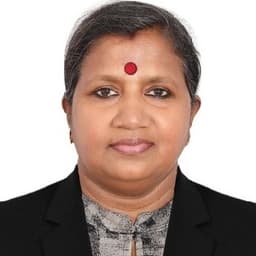
Jayakumary Muttappallymyalil
Gulf Medical University
Public health education strengthens health knowledge, supports informed decisions and encourages healthier behaviour. This session addresses health literacy, community education, professional training, school and university initiatives, behavioural change and innovative approaches for communicating public-health information.
Abstracts may include educational interventions, health-promotion campaigns, curriculum development, workforce training, digital learning and evaluation of education programs. Educators, researchers, healthcare professionals, public-health practitioners, community organizations and students are encouraged to contribute.
Gulf Medical University

Cancer remains a leading cause of morbidity and mortality, yet many cases may be prevented or detected earlier through increased awareness, risk reduction behaviors, and adherence to recommended…
Dementia is a progressive neurocognitive disorder and a leading cause of disability among older adults worldwide. Although ageing is the strongest risk factor, a considerable proportion of cases may…
Background: Global plastic production rose from 320 million tons per year in 2016 to 400 million tons annually. Due to their lightweight, durability, and versatility, plastics are increasingly used…
Background: Tertiary care hospitals in low- and middle-income countries play a critical role in addressing the growing global burden of end-stage organ failure. The Postgraduate Institute of Medical…
Fentanyl related deaths due to opioid overdoses amongst adolescents have been contributing to large increases in mortality rates within Los Angeles County. Based on the Theory of Planned Behavior…
Community Health Workers (CHWs) are trusted individuals who bridge communication gaps between community members and healthcare providers. CHWs perform a myriad of services within their scope of…
Sessions are CPD-accredited; certificates issued to every registered delegate within two weeks of the conference.
Oral and poster slots for original Public Health Education work, reviewed by the scientific committee.
Meet public health researchers, educators, and policy leaders from around the world across three days.
Accepted abstracts appear in the indexed conference proceedings with a citable DOI.
Plenary lectures from leading voices shaping Public Health Education research and practice.
Attend in person in Singapore or join virtually — same programme, same certificate.
Oral and poster slots for your work — in person in Singapore or online. Not presenting? Attend as a delegate to learn from the field.
The Public Health Education track is a dedicated stream within IPHC 2027 covering the latest research, innovation, and best practice in Public Health Education. It brings together researchers, educators, and practitioners for oral presentations, posters, and discussion.
Public health researchers, practitioners, epidemiologists, educators, doctoral students, and policy leaders with an interest in Public Health Education are all welcome — whether presenting or attending.
Yes. Submit an abstract for oral or poster presentation. All submissions are peer-reviewed by the scientific committee; accepted abstracts appear in the indexed proceedings.
Yes. IPHC 2027 is a hybrid conference — attend the Public Health Education track in person in Singapore or join live online, with on-demand access afterward.
Singapore · March 15–17, 2027· Hybrid · in-person & virtual
Attend without presenting.